Call (289) 644-1701 and describe what happened. We will tell you what to do in the meantime and do our best to see urgent cases as soon as possible.
Rated by our Oakville patients
For eligible patients
Spoken in-clinic
Dundas & Old Bronte
A dental emergency is anything where waiting makes the outcome materially worse: a tooth knocked out, a break that exposes the nerve, bleeding that will not stop, swelling in the face or jaw, or pain that keeps you awake and does not respond to over-the-counter painkillers.
Some things feel alarming but can safely wait a day or two — a lost filling with no pain, a small chip, a dull ache that settles. When you call, describe what happened and what you are feeling, and we will tell you honestly which category you are in. One exception overrides everything: facial swelling with a fever, or swelling that affects your breathing or swallowing, is a medical emergency — go to the nearest emergency department rather than waiting for a dental appointment.
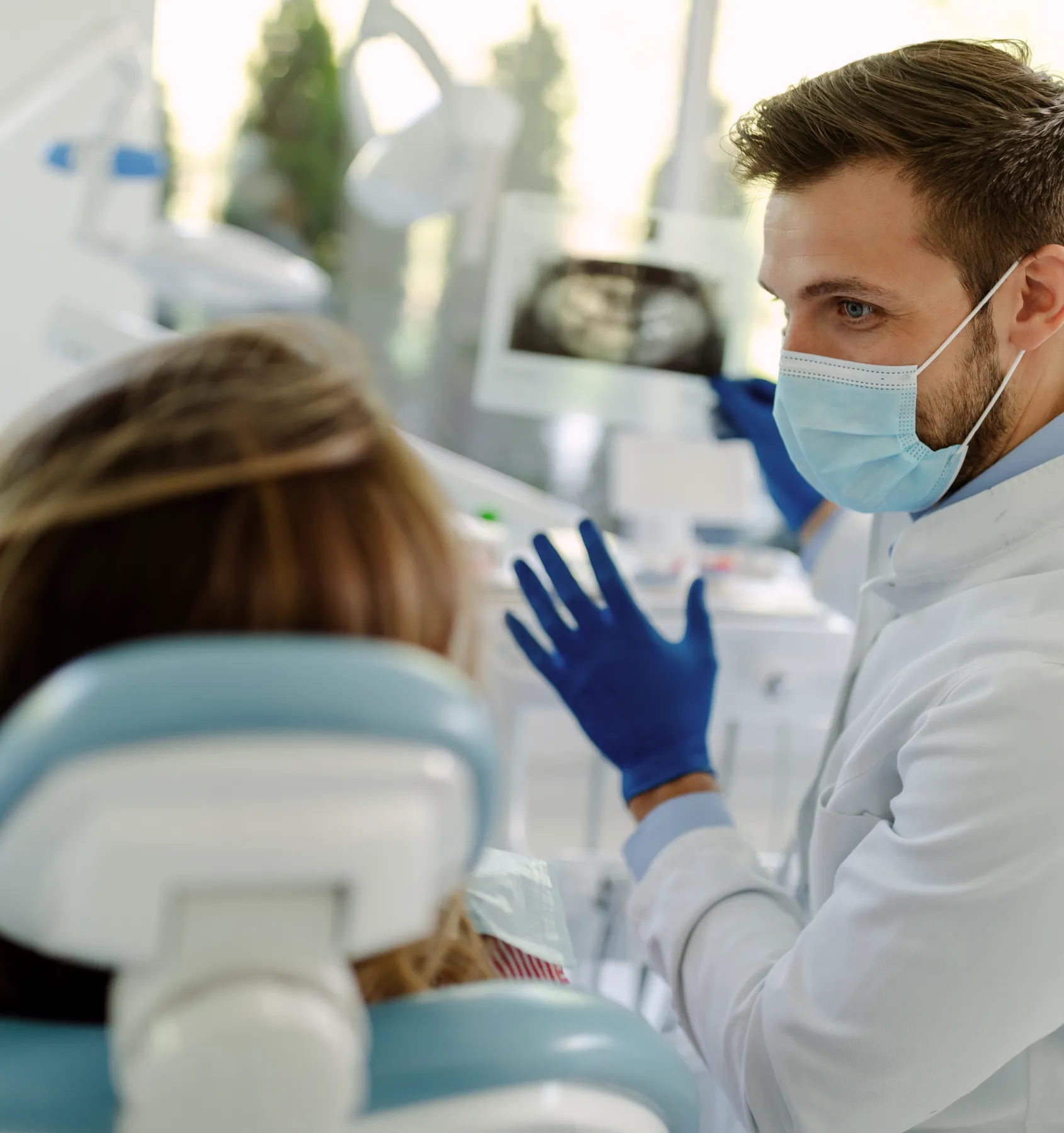
If you are unsure, call and describe it — that costs nothing and takes a minute. As a general guide:
What to do in the minutes before you reach us matters — here is the short version for the four most common calls:
Handle it by the crown, never the root. Rinse gently with milk or saline, place it back in the socket if you can, or keep it in milk. Call immediately — the replant window is short.
Usually the nerve. Rinse with warm salt water, take your usual painkiller, and keep your head raised at night. Persistent pain often means root canal treatment.
Keep any fragments. Rinse your mouth, use a cold compress for swelling, and cover a sharp edge with dental wax. Bring the pieces with you.
Protect the tooth. Keep the crown, avoid chewing on that side, and do not use household glue. Most are re-cemented straightforwardly.
An emergency exam with the x-rays needed to find the problem is typically quoted between about $100 and $250. Any treatment that follows — a filling, root canal or extraction — is priced separately and explained before we begin. If cost is a worry, call anyway: we will tell you what is genuinely urgent now and what can safely wait, and insurance or the Canadian Dental Care Plan covers a share of emergency care for eligible patients.
You see the exact cost in writing before any treatment begins — no surprises at the front desk.
We help you understand your coverage and submit claims, so you know your real out-of-pocket cost.
Sol Dental Studio accepts the Canadian Dental Care Plan for eligible patients.
The right destination depends on the problem — and going to the wrong one costs hours you may not have.
Tell us what happened, when it started, and where the pain is. We give first-aid guidance immediately — for a knocked-out tooth, that advice on the phone can decide whether the tooth survives.
Genuine emergencies are prioritised and we do our best to see them as soon as possible. If we cannot get to you quickly enough, we will say so and point you somewhere that can.
An exam and x-ray find the cause, then the first priority is getting you out of pain. We explain the options and the cost before starting anything.
Getting out of pain is the first half; making sure it does not return is the second. Emergency treatment is often a stabilising step with a definitive repair to follow:

Dr. Richard He — DDS (University of Toronto) with a dedicated implant fellowship. Urgent care and the follow-up treatment handled in one practice.
Patients rate Sol Dental Studio 5.0 out of 5. Gentle freezing, unhurried visits, judgment-free care.
A written estimate before any treatment, insurance guidance included, and CDCP accepted.
Palermo Village at Dundas & Old Bronte. Care in English, Mandarin, Portuguese, Punjabi, Hindi and Urdu.
A dental emergency is any oral health issue that requires immediate attention. This can range from a severe toothache, broken or chipped tooth, knocked-out tooth, abscess or swelling, lost filling or crown, and any trauma or injury to the mouth.
Over-the-counter pain relievers, like ibuprofen, can help reduce discomfort. Rinsing your mouth with warm salt water can also soothe pain. However, it’s crucial to avoid placing aspirin directly on the gums or tooth as it can cause burns.
Retrieve the tooth, holding it by the crown (top) and not the root. Rinse it gently without scrubbing. If possible, try to reinsert it into its socket. If that isn’t possible, store it in a container of milk or saltwater. Seek dental care immediately.
Yes, especially if action is taken promptly. Reinserting the tooth within an hour of it being knocked out can increase the chances of saving it.
A dental infection won’t resolve on its own. Depending on the tooth, treatment is usually root canal treatment or extraction — and the sooner it’s treated, the simpler the treatment tends to be.
