If you have ever wondered how often you really need a dental cleaning, you are not alone. “Twice a year” is the advice most of us grew up with — but the honest answer is that the right cleaning schedule depends on your own mouth, your habits, and your risk factors. Some people are perfectly healthy on two visits a year; others genuinely need to come in more often to stay ahead of gum disease.
This guide explains where the six-month rule comes from, what actually happens during a cleaning, who needs to come in more often, and why professional cleanings protect far more than just your smile. By the end you will know exactly how to build a cleaning schedule that fits your needs.
How Often Should You Get Your Teeth Cleaned?
For most healthy adults, a professional cleaning and checkup every six months is a sensible default, and it is the interval most Canadian dentists recommend for patients with good oral health. Regular visits let your dental team remove buildup before it causes damage and catch small problems while they are still easy — and inexpensive — to treat.
That said, six months is a starting point, not a universal rule. Some patients with excellent home care and low risk can stretch to longer intervals, while others genuinely benefit from a cleaning every three to four months. The best schedule is the one your dentist sets with you after looking at your gums, your history, and your day-to-day habits. Think of the six-month recall as the average, not the answer for everyone.
What Affects How Often You Need a Cleaning
Your ideal cleaning frequency comes down to how quickly plaque and tartar build up in your mouth and how healthy your gums are. You may need cleanings more often if you:
- Have gum disease or a history of it — active or past periodontal disease usually calls for more frequent maintenance visits.
- Smoke or use tobacco — tobacco raises your risk of gum disease and slows healing.
- Have diabetes or another condition that affects your immune response and gum health.
- Are pregnant — hormonal changes can make gums more prone to inflammation (“pregnancy gingivitis”).
- Wear braces or clear aligners — appliances trap plaque and make thorough cleaning at home harder. If you are considering treatment, our clear aligner options in Oakville come with guidance on keeping your teeth clean throughout.
- Build up tartar quickly or are prone to cavities — some people simply accumulate calculus faster and benefit from shorter intervals.
On the other hand, if you have healthy gums, no cavities, and a consistent brushing and flossing routine, your dentist may be comfortable keeping you on a standard six-month schedule.
Signs It Might Be Time for a Cleaning
Beyond the calendar, your mouth often tells you when a cleaning is overdue. Watch for:
- Gums that bleed when you brush or floss
- Persistent bad breath that does not go away after brushing
- A rough, fuzzy, or hardened film on your teeth (that is tartar)
- Red, swollen, or tender gums
- Yellowing or staining from coffee, tea, wine, or tobacco
- Tooth sensitivity or gums that are starting to recede
None of these should be ignored. Bleeding gums in particular are an early warning sign of gum disease — and the earlier it is addressed, the easier it is to reverse.
Why Professional Teeth Cleaning Is Important
Brushing and flossing at home are essential, but they cannot do the whole job on their own. Throughout the day a sticky film of bacteria called plaque forms on your teeth. If it is not removed, plaque hardens into tartar (also called calculus) within a day or two — and once tartar forms, no amount of brushing will remove it. It has to be cleaned off by a dental hygienist or dentist using professional instruments.
That is the core reason regular cleanings matter: they clear away the buildup you simply cannot reach or remove at home, especially along the gumline and between teeth. A professional cleaning helps you:
- Remove plaque and tartar that brushing and flossing leave behind
- Prevent cavities and tooth decay
- Reduce the risk of gum disease and keep your gums healthy
- Remove surface stains from coffee, tea, and other everyday foods
- Keep your breath fresh by clearing the bacteria that cause odour
- Protect your long-term oral health and keep your natural teeth longer
Types of Dental Cleanings
Not every cleaning is the same. The type you need depends on the health of your gums:
Routine cleaning (prophylaxis)
This is the standard cleaning most patients receive at a regular dental checkup. It removes plaque, tartar, and surface stains from above the gumline and keeps healthy mouths healthy.
Deep cleaning (scaling and root planing)
When gum disease is present, tartar and bacteria collect below the gumline in pockets around the teeth. A deep cleaning removes that buildup and smooths the tooth roots so the gums can heal and reattach. It is often done over one or more visits and may include local anaesthetic for comfort.
Periodontal maintenance
Patients who have been treated for gum disease usually move onto a maintenance schedule — typically every three to four months — to keep the condition under control and prevent it from returning.
What Happens During a Dental Cleaning?
A routine cleaning is straightforward and comfortable. Here is what a typical visit at our Oakville dental office looks like:
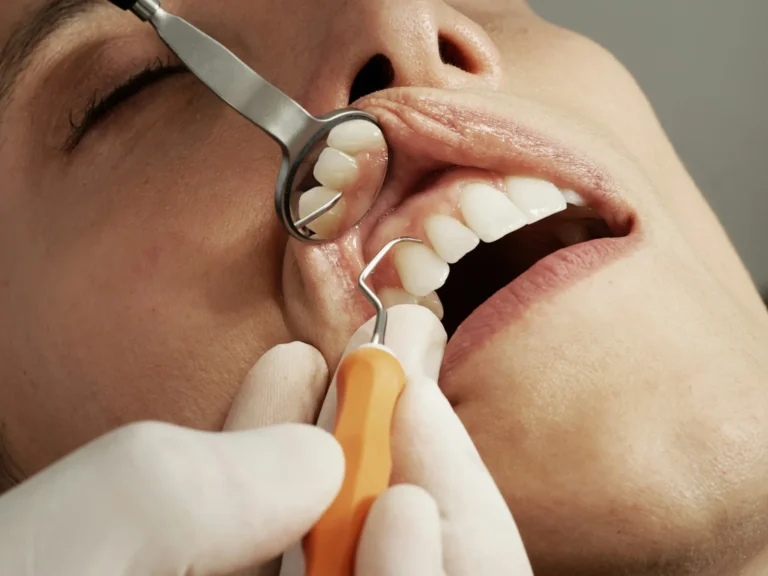
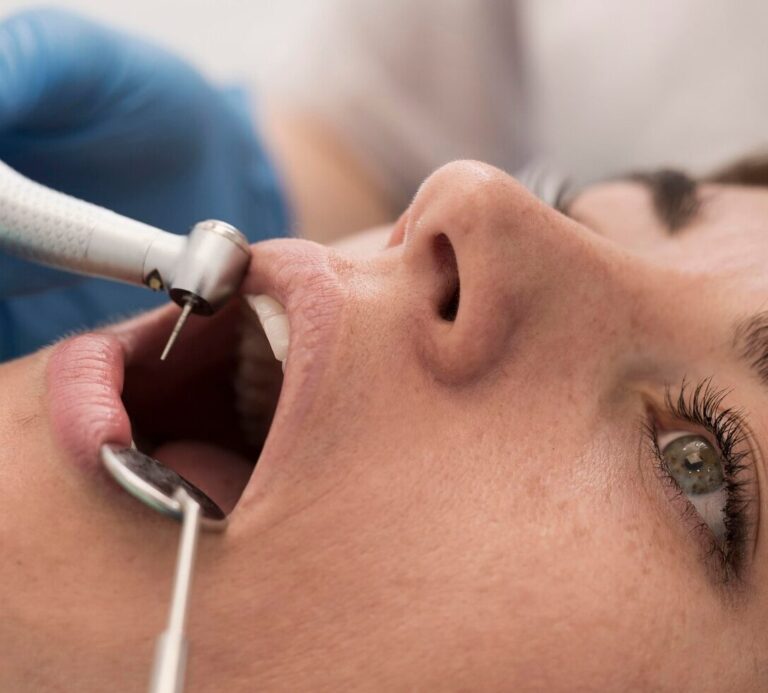
- Examination: Your dentist or hygienist first checks your teeth and gums for any signs of decay, inflammation, or other concerns.
- Scaling: Using gentle instruments, they remove plaque and tartar from the surfaces of your teeth and along the gumline.
- Polishing: A polishing paste smooths the teeth and lifts surface stains, leaving them clean and bright.
- Flossing and rinse: A thorough flossing clears anything left between the teeth, followed by a rinse.
- Advice and next steps: You will get personalized tips and, if needed, a recommendation for your next visit or further treatment.
The whole appointment is designed to be calm and unhurried — if you feel any sensitivity, just let your hygienist know and they will adjust.
What Happens If You Skip Regular Cleanings?
Putting off cleanings gives plaque and tartar time to build up, and the effects add up quietly:
- Gum disease: Tartar irritates the gums, leading first to gingivitis (red, swollen, bleeding gums) and, if left unchecked, to periodontitis — a more serious infection that can damage the bone supporting your teeth.
- Cavities and decay: Buildup and trapped bacteria increase your risk of cavities that may eventually need fillings, crowns, or root canal treatment.
- Tooth loss: Advanced gum disease is one of the leading causes of tooth loss in adults.
- Missed early warning signs: Regular visits are also when your dentist screens for issues like oral cancer and catches small problems before they become painful or costly.
Research has also linked gum disease to broader health conditions such as heart disease and diabetes, which is another reason keeping your gums healthy is worth the routine visits. Gingivitis caught early is usually reversible — but the longer it is left, the harder and more expensive it becomes to treat.
Does Insurance Cover Dental Cleanings?
In many cases, yes. Most Canadian dental benefit plans cover routine cleanings and checkups, often one or two recall visits per year, though the exact coverage and frequency depend on your specific plan. If you are covered under the Canadian Dental Care Plan (CDCP), eligible cleanings and preventive care may be covered as well.
At Sol Dental Studio we offer direct billing to most insurance providers, so you usually will not have to pay the full amount up front. If you do not have coverage, we are happy to talk through flexible payment options — cost should never be the reason you skip preventive care. Bring your insurance details to your visit and we will help you understand exactly what is covered.
Teeth Cleaning for the Whole Family
Cleanings are not just for adults. Children benefit from regular professional cleanings and checkups too — it protects their developing teeth and helps them grow up comfortable in the dental chair. As a family-friendly practice, we welcome patients of every age and tailor each cleaning to the person in the chair, from a child’s first visit to a grandparent’s periodontal maintenance. Our gentle care for kids in Oakville is designed to make cleanings easy and even fun for little ones.
How to Keep Your Teeth Healthy Between Cleanings
Professional cleanings work best alongside a solid routine at home. Between visits:
- Brush twice a day for two minutes with fluoride toothpaste
- Floss once a day to clean between teeth and under the gumline
- Limit sugary and acidic foods and drinks
- Drink plenty of water and avoid tobacco
- Replace your toothbrush every three to four months
- Keep your regular checkups so problems are caught early
A consistent home routine plus regular professional care is the most reliable way to keep your smile healthy for life.
Book Your Dental Cleaning in Oakville
Whether it has been six months or a few years since your last visit, the team at Sol Dental Studio is here to help you get back on track with gentle, judgment-free care. We will assess your teeth and gums and recommend a cleaning schedule that fits your needs — no lectures, just a healthier smile.
New patients are always welcome. Call us at (289) 644-1701 or book online to schedule your cleaning and checkup today.
Frequently Asked Questions
How often should I get my teeth cleaned?
Most people benefit from a professional cleaning and checkup every six months. If you have gum disease, smoke, have diabetes, are pregnant, or are prone to buildup, your dentist may recommend visits every three to four months.
Does a dental cleaning hurt?
A routine cleaning is generally painless and comfortable. If your teeth or gums are sensitive, let your hygienist know — they can adjust their technique, and for deep cleanings a local anaesthetic can keep you completely at ease.
Is a deep cleaning the same as a regular cleaning?
No. A regular cleaning removes plaque and tartar from the tooth surfaces and along the gumline. A deep cleaning goes below the gumline to treat active gum disease and is recommended only when your gums need it.
How long does a dental cleaning take?
A routine cleaning and checkup usually takes about 30 to 60 minutes, depending on how much buildup is present and whether X-rays or additional care are needed. Deep cleanings take longer and may be split across more than one visit.
Will a cleaning whiten my teeth?
A cleaning removes surface stains and often leaves teeth looking noticeably brighter, but it does not change the natural colour of your teeth. If you want a whiter shade, ask us about professional teeth whitening in Oakville.
What happens if I go years without a cleaning?
Tartar builds up and raises your risk of gum disease, cavities, and even tooth loss. The good news is that it is never too late to start — book a checkup and your dentist will create a plan to get your oral health back on track.