A professional teeth cleaning is one of the simplest things you can do for your mouth, and one of the least explained. Most people know they should have one regularly, but not what the hygienist is actually doing, why parts of it can feel scratchy, or how the cost is worked out.
This guide walks through a dental cleaning from start to finish: what happens at each step, the tools involved, how long it takes, whether it hurts, what it costs in Ontario, and how to look after your teeth afterwards. If you want to know how often to book one, our guide to how often you should have your teeth cleaned covers that in detail.
What is a teeth cleaning?
A teeth cleaning, also called a dental cleaning or a hygiene visit, is a preventive appointment in which a dental hygienist removes the plaque and tartar your toothbrush cannot, then polishes your teeth smooth. It is usually paired with a checkup, and it is the main way gum disease and decay are kept from getting started.
The reason you need one comes down to how plaque behaves. Plaque is a soft, sticky film of bacteria, and for about a day or two, you can brush it away. After that, minerals in your saliva harden it into tartar, which bonds to the tooth and will not come off with a toothbrush, however hard you scrub. Brushing harder only wears enamel and irritates the gums. Tartar has to be removed with instruments, and that is the whole point of a professional cleaning.
Tartar matters because it sits at the gumline, holding bacteria against the gum. That is what causes the bleeding and inflammation of early gum disease. Cleared regularly, gums stay healthy. Left in place, the inflammation can work its way below the gumline and become a job for a deep cleaning instead.
What happens during a teeth cleaning, step by step
Every clinic has its own routine, but a standard professional teeth cleaning covers the same ground. At Sol Dental Studio, a hygiene visit includes these steps.
1. A look at your gums first
Before the cleaning starts, your hygienist checks your gums, notes any spots that bleed, and measures the pocket depths around your teeth. Recording those numbers at each visit means early gum disease is caught by measurement rather than by symptoms, and it lets the cleaning focus on the areas that need it most.
2. Scaling to remove tartar
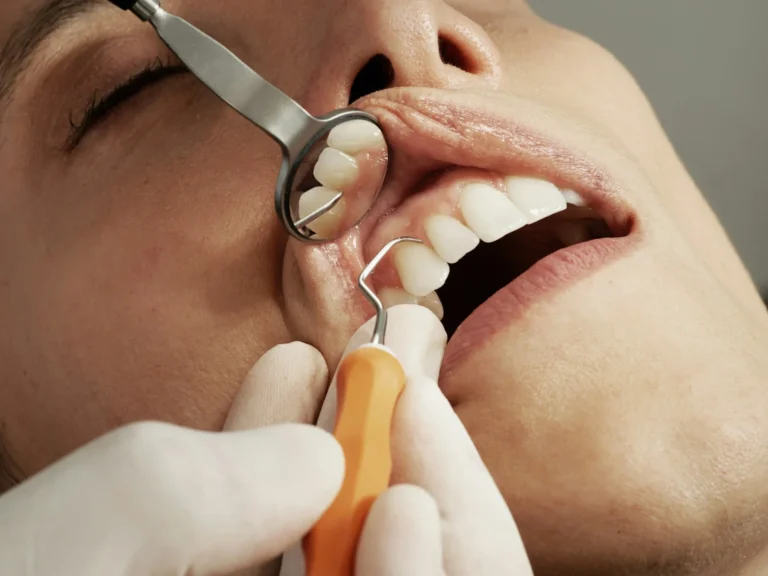
Scaling is the most important part of the visit. The hygienist removes hardened tartar from the tooth surfaces and from just under the gumline, where inflammation begins. This is the part that can feel scratchy, and it is where most of the appointment time goes.
Two kinds of instrument are usually involved. An ultrasonic scaler vibrates tartar loose while a fine spray of water rinses it away, which is why you may hear a high-pitched hum and feel a cool mist. Hand scalers are then used for the finer work and to check that every surface feels smooth.
3. Polishing
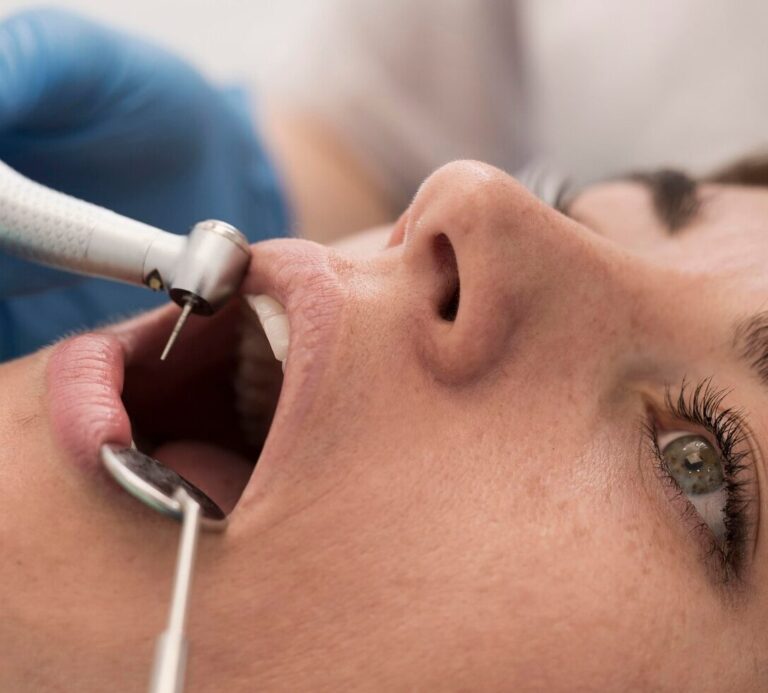
Once the tartar is gone, your teeth are polished with a slightly gritty paste on a soft, spinning rubber cup. Teeth polishing lifts surface stains from coffee, tea, and tobacco and leaves the enamel smooth, which makes it harder for plaque to cling on. It is the part most people enjoy.
Polishing is not the same as whitening. It removes surface staining, so teeth often look brighter, but it does not change their natural shade. If you want a lighter shade, professional teeth whitening is the treatment for that.
4. Flossing
Your hygienist flosses between your teeth to clear the spaces that the polishing cup cannot reach.
5. Fluoride
Many cleanings finish with a fluoride varnish painted onto the teeth. It is optional but worthwhile, especially if you get cavities often, because fluoride strengthens enamel and can reduce sensitivity. Our article on the importance of fluoride explains how it works.
6. The dentist’s exam and your home-care plan
A cleaning is usually paired with a dental checkup, where the dentist examines your teeth and gums, along with any x-rays that are due. Before you leave, you should know the one or two specific places you are missing at home, rather than getting a general reminder to floss more.
The tools used in a dental cleaning
The instrument tray can look intimidating, but each tool has a simple job:
- Mouth mirror: lets the hygienist see behind and between your teeth.
- Periodontal probe: a thin, blunt instrument marked in millimetres, used to measure the pockets around each tooth.
- Ultrasonic scaler: vibrates tartar loose under a spray of water.
- Hand scalers and curettes: used for fine removal and finishing around the gumline.
- Suction: keeps your mouth clear of water and debris.
- Polisher: a slow-speed handpiece with a soft rubber cup and polishing paste.
- Floss and fluoride varnish: for between the teeth and for the final protective coat.
How long does a teeth cleaning take?
A typical teeth cleaning takes between 30 and 60 minutes. Where you fall in that range depends mostly on how much tartar has built up since your last visit and how healthy your gums are. A first visit also includes a full exam and any x-rays that are needed, so allow a little more time.
A regular schedule is the easiest way to keep appointments short. Six months suits most people. Some need to come every three or four months, and that is not a criticism: it simply reflects how quickly your mouth forms tartar.
Does a teeth cleaning hurt?
For most people, no. A cleaning feels like pressure, scraping, vibration, and a cool spray of water, which can be unfamiliar but should not be painful. It is more likely to be uncomfortable if:
- your gums are inflamed and bleed easily
- there is a lot of tartar, especially if it has been a while since your last cleaning
- you have gum recession or exposed roots, which are more sensitive than enamel
- your teeth are sensitive to cold, so the water spray is noticeable
If anything feels sensitive, say so. We can adjust the technique, switch to a gentler tip, or numb the area, so the rest of the cleaning is comfortable.
Why your teeth may feel sensitive after a cleaning
It is common for teeth to feel a little sensitive, or for gums to feel tender, for a day or two after a cleaning. Tartar can cover parts of the tooth near the gumline, and once it is removed, those surfaces feel hot and cold again. Inflamed gums can also feel sore after they have been cleaned. Both usually settle within a few days. A toothpaste for sensitive teeth helps, and if the sensitivity has not eased after a couple of weeks, let us know.
Is it normal for gums to bleed during a cleaning?
A little bleeding is common when gums are inflamed, and it is a sign that the gums need attention, not that the cleaning was too rough. Healthy gums rarely bleed. If yours bleed at every visit, consistent brushing and cleaning between your teeth usually improve it, and the pocket measurements show whether the bleeding is coming from deeper pockets.
Teeth scaling vs cleaning: is there a difference?
The terms overlap. Scaling is the main part of a cleaning: it is the removal of tartar. A routine cleaning is scaling plus polishing, usually with fluoride and a checkup. When people talk about scaling as a separate treatment, they often mean scaling and root planing, which is the deep cleaning used to treat gum disease below the gumline.
| At a glance | Routine cleaning | Deep cleaning |
|---|---|---|
| Who it is for | Healthy gums | Diagnosed gum disease |
| What is cleaned | At and just below the gumline | Root surfaces inside deeper pockets |
| Freezing | Rarely needed | Standard |
| Visits | One, with your checkup | Usually one or two |
| Typical Ontario cost | About $120 to $300 per visit | About $200 to $600 per course |
How many units of scaling is normal?
In Ontario, scaling is billed by time. One unit is 15 minutes of scaling, and half units are used for shorter work. The number of units you need depends on how much tartar there is and how healthy your gums are, so there is no single normal number. Someone with healthy gums who comes in regularly needs less scaling time than someone whose last cleaning was years ago, or who has early gum disease.
Units matter because insurance plans often limit how many units of scaling they cover each year. The Canadian Dental Care Plan is a good example: as of 2026, it covers up to 4 units of scaling a year for patients aged 17 and over, 1 unit for ages 12 to 16, and half a unit for children under 12, before preauthorization is needed. If your hygienist recommends more time than usual, ask what your plan allows. It is also a good reason to keep cleanings regular: small amounts of tartar take less time to remove.
What a teeth cleaning costs, and what insurance covers
A routine hygiene visit in Ontario is typically quoted between about $120 and $300, depending mainly on how much scaling time is needed and whether fluoride is included. A first visit that also includes an exam and x-rays generally lands between roughly $180 and $410. Those are full fees, so they are also a fair guide to what a teeth cleaning costs without insurance.
Cleanings are among the most widely covered services on dental plans, usually at set intervals. Eligible patients can also have cleanings covered under the Canadian Dental Care Plan. Depending on your adjusted family net income, you may have a co-payment of 0%, 40%, or 60% of the plan’s set fees, and a clinic’s fees can differ from the CDCP’s, so it is worth asking about any extra cost before your visit. The government’s CDCP coverage page explains the details. Sol Dental Studio accepts the CDCP for eligible patients and gives you the cost in writing before any treatment.
What to do after a teeth cleaning
How long after a teeth cleaning can you eat?
After a routine cleaning, you can usually eat and drink straight away. There are two exceptions. If fluoride varnish was applied, follow the instructions you are given. They vary by product, but they commonly include waiting about 30 minutes before eating or drinking and avoiding hot drinks and hard or crunchy foods for a few hours. And if any area was numbed, wait until the freezing wears off, so you do not bite your cheek or tongue.
If your teeth feel sensitive, lukewarm food and drinks will be more comfortable than very hot or very cold ones for the rest of the day.
Keeping your teeth clean between visits
A cleaning resets the clock, and what you do every day decides how quickly tartar returns:
- Brush twice a day for two minutes, angling the bristles into the gumline rather than straight at the teeth.
- Clean between your teeth once a day with floss, interdental brushes, or a water flosser, whichever you will actually use.
- Cut down how often you have sugar, not just how much.
- Book your next cleaning before you leave, so the gap does not stretch.
For more detail, see our guides to brushing and flossing techniques and the foods that make or break your oral hygiene.
Teeth cleaning for kids

Canadian guidance is that a child’s first dental visit should happen by their first birthday, or once the first tooth arrives. Early visits are kept short, friendly, and unhurried, so the chair becomes somewhere unremarkable to go. For children, a cleaning usually means a gentle clean and a fluoride varnish to strengthen enamel against the cavities they are most prone to, and sealants on the back molars are often added once children reach school age.
At home, children should brush twice a day with a fluoride toothpaste, and parents should help or supervise until around age eight. Our children’s dentistry page explains what a first visit involves.
Are there disadvantages to a teeth cleaning?
Very few, and the honest list is short:
- Temporary sensitivity or tender gums for a day or two.
- A little bleeding if your gums are inflamed.
- The time and cost of the visit, although regular cleanings cost far less than treating the problems they prevent.
- A medical consideration for a small group of people: if you have certain heart conditions, a joint replacement, or a weakened immune system, tell the clinic, because your dentist may recommend antibiotics or check with your physician before any cleaning below the gumline.
One common worry is unfounded. Professional scaling and polishing are designed to remove deposits and surface stains, not enamel, so a regular cleaning is not something to avoid for fear of damage. What does wear enamel over time is scrubbing too hard at home.
Teeth cleaning at Sol Dental Studio in Oakville
At Sol Dental Studio, a teeth cleaning starts with a look at your gums and a measurement, so the cleaning is targeted rather than generic. Tartar is removed, your teeth are polished smooth, and you leave with one or two specific things to work on at home. If anything feels sensitive, tell us, and we will adjust.
We accept the CDCP for eligible patients, help with insurance claims, and give you the cost in writing before any treatment. Care is available in English, Mandarin, Portuguese, Punjabi, Hindi, and Urdu. To book, call (289) 644-1701 or contact us online. We are at 2450 Old Bronte Rd, Unit E, in Palermo Village at Dundas and Old Bronte, and new patients are welcome.
Frequently asked questions
How often should you get your teeth cleaned?
Every six months suits most people. If you have had gum disease, build up tartar quickly, smoke, are pregnant, have diabetes, or wear braces, every three to four months may be better. Our guide to how often to have your teeth cleaned explains how to tell.
How long does a dental cleaning take?
Usually 30 to 60 minutes, depending on how much tartar has built up and how healthy your gums are. A first visit that includes a full exam and x-rays takes a little longer.
Does a teeth cleaning hurt?
It should not. Most people feel pressure, scraping, and vibration rather than pain. If your gums are inflamed or your teeth are sensitive, tell your hygienist, who can use a gentler technique or numb the area.
Can a teeth cleaning remove stains?
Yes. A cleaning removes many surface stains from coffee, tea, wine, and tobacco, so teeth often look brighter afterwards. It does not change the natural shade of your teeth, which takes whitening.
How long after a teeth cleaning can I eat?
Usually straight away. If fluoride varnish was applied, follow the instructions you are given, which commonly mean waiting about 30 minutes. If you were numbed, wait until the freezing wears off.
What is the difference between scaling and polishing?
Scaling removes hardened tartar from the teeth and from just under the gumline, and it is the part that protects your gums. Polishing comes afterwards, smoothing the enamel and lifting surface stains. A routine cleaning includes both.
When is a regular cleaning not enough?
When gum disease has formed pockets deeper than about 4 mm, a regular cleaning cannot reach the bottom of them. A deep cleaning, also called scaling and root planing, is then needed to clean the roots below the gumline.
Does the CDCP cover teeth cleaning?
Yes, for eligible patients, within set limits. As of 2026, for patients aged 17 and over, the CDCP covers up to 4 units of scaling and half a unit of polishing in any 12 months. Your co-payment depends on your adjusted family net income, and a clinic’s fees may be higher than the plan’s.