All-on-4 Dental Implants vs Single Implants: A Complete Comparison Guide

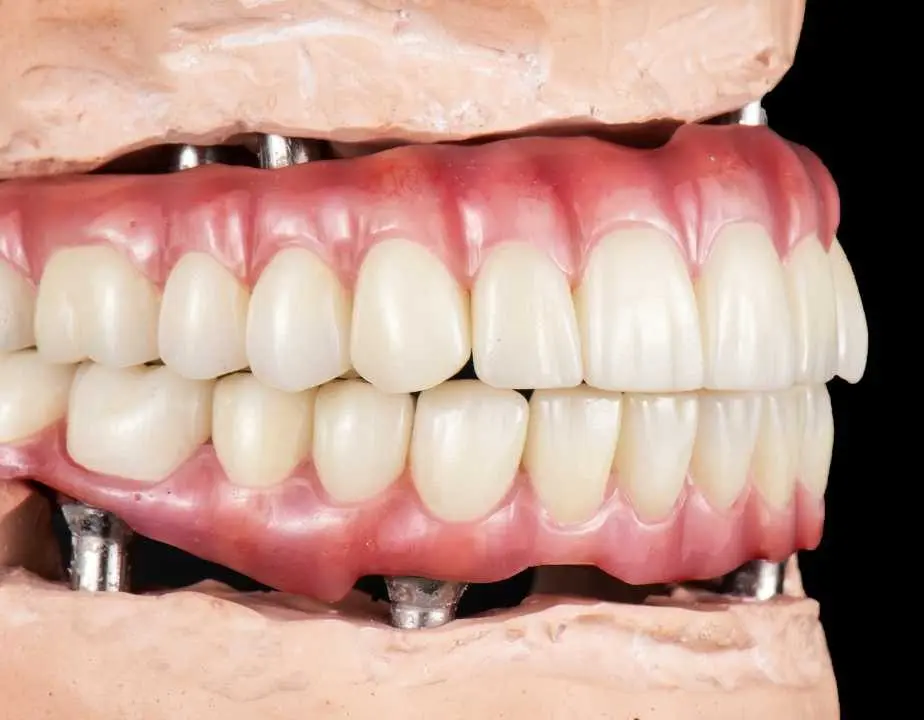
Model of upper and lower full-arch bridges attached to implants, the type of fixed teeth used with All-on-4 dental implants

If you’re missing several teeth, or your remaining teeth are failing, you’ve probably come across All-on-4 dental implants. You’ve likely heard of single dental implants too. Both use titanium posts placed in the jaw, but they solve different problems.

This guide compares All-on-4 dental implants with single implants in plain language. We cover how each one works, who each one suits, what each typically costs in Ontario, what recovery feels like, and what the research says about how long they last.

At Sol Dental Studio in Oakville, we compare these options with you at the exam, so the recommendation is based on your mouth rather than on one treatment we happen to offer.

What Are All-on-4 Dental Implants?

All-on-4 is a way to replace a full arch of teeth (all the upper or all the lower teeth) using four implants. The two front implants are placed straight. The two back implants are angled backward, which lets them make the most of the bone you have and support a longer row of teeth.

For some patients, that angle avoids the need for bone grafting, though not for everyone. A fixed bridge of teeth is then attached to the four implants.

“Fixed” means it stays in your mouth. You don’t take it out at night the way you would a regular denture. Only your dental team can remove it, usually for professional cleaning and repairs.

You’ll also see it written as “all on four dental implants,” “all on 4 implants,” or simply “all on four.” The concept was first described in a 2003 study by Dr. Paulo Maló and colleagues in Lisbon, Portugal, who attached a temporary fixed bridge on the same day the implants were placed.
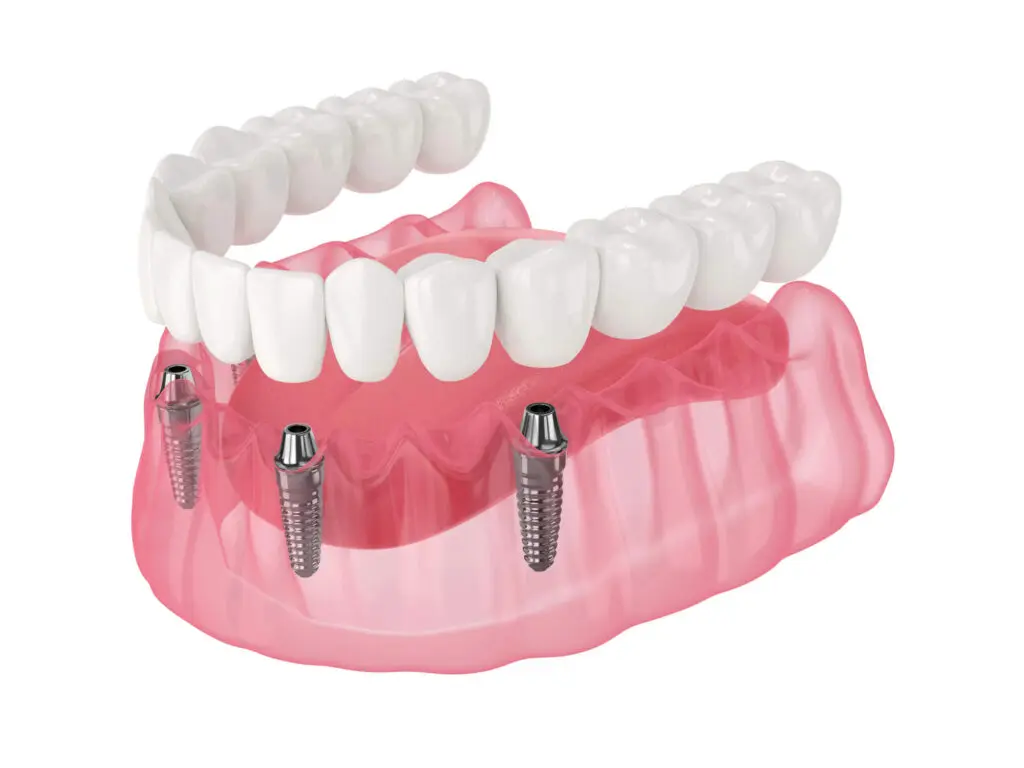
Illustration of a full-arch bridge being fitted onto implants in the lower jaw

What Are Single Dental Implants?

A single dental implant replaces one tooth at a time. A small titanium post is placed in the jawbone where the root used to be. Over a few months, the bone fuses to it, and a custom crown is then attached on top with a connector called an abutment.

If you’re missing three or more teeth in a row, two implants can also support a small bridge, so you don’t need a post for every tooth.

Single implants are often called the closest thing to a natural tooth. Each one stands on its own, you can floss around it, and your healthy neighbouring teeth don’t need to be filed down. Our dental implants in Oakville page explains how we plan each stage.

All-on-4 vs Single Implants at a Glance

Feature Single implants All-on-4
Typically suits One or a few missing teeth A full arch missing or failing
Implants One per tooth, or two for a small bridge Four per arch
Removable? No No, only by your dentist
Teeth on surgery day Final crown comes later Often a temporary bridge
Bone grafting Sometimes, at each site Sometimes avoided
Cleaning Brush and floss Brush and clean under the bridge
If a tooth breaks Only that crown is fixed The bridge comes out for repair
Typical Ontario cost $3,000 to $5,000 per tooth $20,000 to $35,000+ per jaw

Costs are typical Ontario ranges, not quotes. The cost section below shows where they come from.

Who Is a Good Candidate for Each Option?

The right choice depends less on which option sounds better and more on what’s happening in your mouth.

Single Implants May Suit You If:

  • You’re missing one tooth or a small group of teeth
  • Your other teeth are healthy and worth keeping
  • You have enough bone at the implant site, or you’re open to a graft

All-on-4 May Suit You If:

  • You’re missing most of your teeth in one arch, or they’re badly decayed, loose, or failing
  • You wear a full denture and are tired of it slipping, rubbing, or covering the roof of your mouth
  • You’ve been told you don’t have enough bone for many separate implants
  • You want fixed teeth rather than a removable appliance

What If Only Some of Your Teeth Are Failing?

All-on-4 replaces every tooth in the arch, so any remaining teeth there are removed, often during the same surgery. If several of your teeth are still healthy, saving them with crowns, a bridge, or a few implants may be the better plan.

Before you agree to a tooth extraction, ask which teeth could be saved.

Smoking, gum disease, heavy teeth grinding, and health conditions that slow healing can all affect implant treatment, but none of these automatically rules you out. At your exam, Dr. He reviews your dental history and uses digital imaging to check your bone before recommending a plan.

What About Implant-Retained Dentures?

There’s a middle option many patients don’t hear about. An implant-retained denture (sometimes called a snap-in denture) clicks onto a few implants but can still be taken out for cleaning.

It’s more secure than a regular denture, often simpler than a fixed full arch, and a common fix for a loose lower denture. See our full and partial dentures page, or read our guide to dental implants vs dentures for a closer comparison.

What Does the Research Say About All-on-4?

All-on-4 has been studied for more than 20 years, and much of the long-term data comes from the clinic that developed it. In a 2019 study of 471 patients followed for 10 to 18 years, Maló’s team reported that 93% of the lower-jaw implants and 98.8% of the fixed bridges were still in place.

A companion study of upper jaws reported similar results. There are caveats: both studies came from one highly experienced clinic, many patients were lost to follow-up, and repairs such as chipped teeth on the bridge were common.

Smokers also had more implant problems. Your own results depend on your health, your bone, your habits, and your follow-up care.

Single implants have a long track record too. A 2019 review of 18 studies put the 10-year survival of dental implants at about 96%.

With either option, the main long-term risk is inflammation of the gum and bone around the implants, which daily cleaning and regular check-ups help prevent.

Not sure which implant option fits your mouth?

All-on-4 Dental Implants Cost in Ontario

There’s no single price for All-on-4 dental implants, because every full-arch case is different. As a general guide, these are typical Ontario market ranges, not a quote and not our fee schedule.

Treatment Typical Ontario range
Single implant (post, abutment, and crown) $3,000 to $5,000 per tooth
Full arch of fixed teeth on implants $20,000 to $35,000+ per jaw
Implant-retained denture Quoted after implant planning
Full mouth reconstruction $6,000 to $60,000, by scope

The single-implant and reconstruction figures come from our dental implants and full mouth reconstruction pages. The full-arch range comes from our guide, What Is Full Mouth Reconstruction?

Here’s what usually shapes the All-on-4 dental implants cost:

  • One arch or two: Treating both the upper and lower jaws roughly doubles the work.
  • Extractions: Removing remaining failing teeth is often part of the same surgery.
  • Bone grafting: Some cases still need it, even with angled implants.
  • Imaging and planning: A 3D scan maps the bone and nerves before surgery.
  • Temporary and final bridge: Most patients get a temporary bridge first, then a stronger final bridge whose material affects the price.

Is All-on-4 Cheaper Than Single Implants?

For a full arch, usually yes. Even 10 single implants at $3,000 to $5,000 each would come to $30,000 to $50,000 for one jaw, and that’s rarely how a full arch is rebuilt. For one or two missing teeth, single implants cost far less than a full-arch plan.

Searching for the cheapest place to get All-on-4 dental implants in Canada is understandable. Before you commit, ask what’s included: imaging, extractions, the temporary bridge, the final bridge, and follow-up visits. A lower quote that leaves these out can end up costing more.

For single-implant pricing in detail, see our guide to the cost of dental implants in Ontario.

Does Insurance or the CDCP Cover All-on-4?

Some private plans pay toward part of implant treatment, often under major restorative care, but coverage varies a lot. Most plans also have an annual maximum, which a full-arch case can easily exceed.

Dental implants are not on the Canadian Dental Care Plan’s list of covered services. Exams, X-rays, tooth removal, and dentures are listed, so eligible patients may get help with parts of a plan.

We help you understand your coverage and submit claims. You can read how the plan works at our office on our Canadian Dental Care Plan page.

All-on-4 Timeline vs Single Implant Timeline

A single implant usually takes about three to six months from start to finish, mostly while the bone fuses to the post before the final crown goes on.

The timeline for All-on-4 dental implants follows a similar healing curve, but for a whole arch at once:

  1. Exam and planning. Your dental history, digital imaging, and a written estimate come first.
  2. Surgery day. Any remaining teeth in the arch are removed if needed, and the four implants are placed. If the implants are stable enough, a temporary fixed bridge is often attached the same day or within a couple of days.
  3. Healing. The implants fuse with the bone over several months. You’ll eat softer foods while that happens.
  4. Final bridge. Once healing is confirmed, a stronger final bridge is made and fitted.
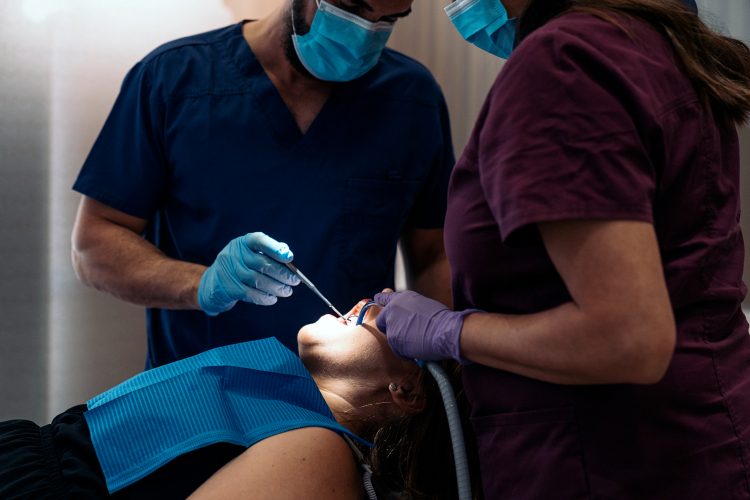
Dentist and dental assistant treating a patient in the dental chair

A same-day temporary bridge isn’t always possible. If an implant isn’t stable enough, the bridge may be attached later to protect healing.

Recovery: Swelling, Bruising, and the First Few Weeks

Recovery after a single implant is often mild. Some soreness or swelling is common, and it usually settles within a few days.

With All-on-4, surgery covers a whole arch, so recovery takes longer. It’s common to have:

  • Swelling of the gums and face that peaks around day two or three, then eases
  • Bruising on the cheeks or jaw, which fades as you heal
  • A softer diet while the implants bond with the bone, for as long as your dentist advises

Cleveland Clinic notes that most bruises fade within two weeks. Call us if swelling, soreness, or bruising gets worse after the first few days instead of better.

Before and After All-on-4 Dental Implants: What Changes Day to Day

Before and after photos of All-on-4 dental implants usually show the new smile first. Day to day, a fixed full-arch bridge is designed to give you:

  • Teeth that stay in place, with no loose denture or denture adhesive
  • A wider range of foods once healing allows
  • No plate covering the roof of your mouth
  • Fuller lip and cheek support, since the bridge replaces both teeth and some of the lost gum

Results vary from person to person, and your final teeth are designed around your face, bite, and goals. If you’re looking at before and after photos, ask whether they show the clinic’s own patients and how long after treatment they were taken.

Questions to Ask Before You Choose

Whichever option you’re leaning toward, these questions will help you compare plans and quotes:

  • Can any of my teeth be saved, and what would that plan cost?
  • How many implants does my jaw need, and why?
  • Will I need extractions or bone grafting first, and are they in the quote?
  • Does the quote include imaging, the temporary bridge, the final bridge, and follow-up visits?
  • What is the final bridge made of, and how are repairs handled?
  • How will I clean it, and how often will I need check-ups?
  • What happens if an implant doesn’t fuse with the bone?

Comparing Your Implant Options at Sol Dental Studio

Whether you’re weighing a single implant, an implant bridge, an implant-retained denture, or a full arch of fixed teeth, the first step is an exam. Dr. He plans the surgery and the final teeth together in one practice, uses digital imaging to map your bone, and gives you a written estimate before any treatment begins.

For larger rebuilds, our full mouth reconstruction in Oakville page explains how we stage treatment phase by phase, so costs and healing stay manageable.

We accept the CDCP for eligible patients, help with insurance claims, and offer care in English, Mandarin, Portuguese, Punjabi, Hindi, and Urdu. You can read about Dr. Richard He before your first visit.

To book, call (289) 644-1701 or contact us online. We’re at 2450 Old Bronte Rd, Unit E, Oakville.

Frequently Asked Questions

What are All-on-4 dental implants?

All-on-4 dental implants replace a full arch of teeth with a fixed bridge supported by four implants. The two back implants are angled to make the most of the available bone, and only your dental team removes the bridge.

Is All-on-4 better than single implants?

Neither is better for everyone. Single implants are usually the right fit for one or a few missing teeth. All-on-4 is designed for people missing most or all of the teeth in an arch.

How much do All-on-4 dental implants cost in Ontario?

A full arch of fixed teeth on implants is commonly quoted at about $20,000 to $35,000 or more per jaw in Ontario. A single implant typically runs $3,000 to $5,000 per tooth. Your written estimate after an exam is the only accurate number.

Will I have teeth the same day?

Often, but not always. Many All-on-4 patients get a temporary fixed bridge on the day of surgery or within a couple of days, as long as the implants are stable enough. The final bridge is fitted after healing.

How long do All-on-4 implants last?

In a long-term study from the clinic that developed the concept, 93% of lower-jaw implants and 98.8% of the bridges were still in place after 10 to 18 years. How long yours last depends on your health, home care, habits like smoking or grinding, and regular check-ups.

Does the CDCP cover All-on-4 dental implants?

No. Dental implants are not on the Canadian Dental Care Plan’s list of covered services. Related care such as exams, X-rays, and tooth removal is listed, so eligible patients may get help with parts of a plan.

How long does bruising last after All-on-4 dental implants?

Bruising on the cheeks or jaw is common after full-arch surgery, and most bruises fade within about two weeks. Call your dentist if it gets worse instead of better.

Can I get All-on-4 if I’ve lost bone?

Often, yes. Angling the back implants lets them use the bone you have, which avoids grafting for some patients. Imaging at your exam shows whether you need a graft first.

Share the Post:

Related Posts